


Side, Turkey in Winter: Weather, Sea Temperature and What to Do (December to February)
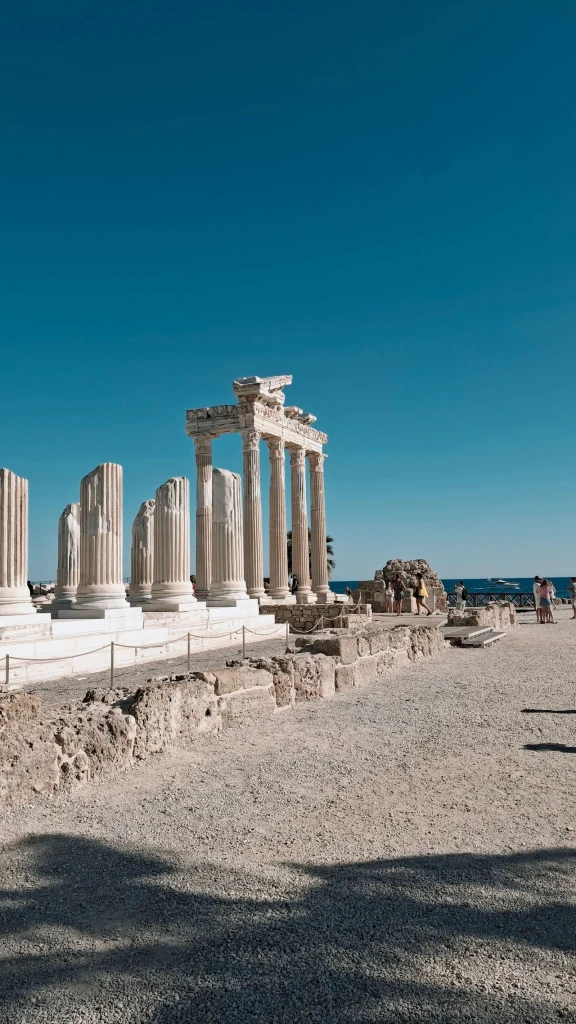
Between December and February, Side is a different town from the one most people picture. The sunbeds are stacked away, the harbour is quiet in the evening and you can stand at the Temple of Apollo with a handful of other people instead of a crowd. Winter here is mild by northern European standards, but it is also the wettest part of the year, so it rewards a bit of planning. This guide uses official long-term climate figures rather than guesses, and it is honest about what changes out of season.
What winter weather in Side is really like
Side has no official weather station of its own, so the most reliable long-term data comes from neighbouring Manavgat, a few kilometres inland. The World Meteorological Organization’s 1991–2020 climate normals for Manavgat look like this:
December | January | February | |
Average daytime high | 17.1 °C | 15.4 °C | 16.3 °C |
Average night-time low | 8.9 °C | 7.3 °C | 7.5 °C |
Average rainfall | 255 mm | 252 mm | 148 mm |
Days with 1 mm+ rain | 10.3 | 11.8 | 8.9 |
Three things stand out. First, it rarely gets properly cold: a typical January afternoon is around 15 °C, and frost on the coast is unusual. Second, December and January are the two wettest months of the whole year, each with more than 250 mm of rain on average. Third, that rain is concentrated. Most of it falls in heavy bursts on around ten to twelve days a month, which means the other days are often dry, bright and calm. A stormy morning can easily turn into a clear afternoon.
February is the turning point. Rain drops by more than a third compared with January, and by March the average high is already 19 °C. If you want quiet streets but a better chance of dry days, late February is the sweet spot.
Is the sea swimmable in winter?
For most people, not comfortably, but it is warmer than you might expect. Climate averages for this stretch of coast put the sea at about 20–21 °C at the start of December, around 19 °C by New Year, roughly 18 °C in mid-January and close to 17 °C by late February.
Some hardy visitors do take a short dip on a sunny, windless day, especially in early December. The bigger issue is getting out into air that may be 15 °C with a breeze. If swimming matters to you, look for a hotel with a heated indoor pool rather than relying on the sea.
Short days: when it gets light and dark
Winter days in Side are short, and the sun sets earlier than many visitors realise. Turkey stays on UTC+3 all year, so sunrise is late in the morning by clock time. Based on standard sunrise and sunset calculations for Side:
- 1 December: sunrise about 07:48, sunset about 17:39
- 21 December: sunrise about 08:03, sunset about 17:41
- 15 January: sunrise about 08:06, sunset about 18:00
- 1 February: sunrise about 07:57, sunset about 18:18
- 28 February: sunrise about 07:28, sunset about 18:46
Around the shortest day you get under ten hours of daylight. In practice, that means sightseeing works best between about 09:00 and 17:00, and if you want to see the Temple of Apollo at sunset, aim to be there by about 17:00 in December.
What changes in Side out of season
Side is a resort town, and the pace drops a lot after the autumn. Expect a mix: some hotels, beach bars and seasonal shops close for winter, while others stay open, and the old town keeps a smaller, more local rhythm. Because opening patterns change from year to year, check that your hotel and anything specific you want to visit will be open on your dates before you book.
What doesn’t change is the setting. The ancient city is woven through the modern streets, so the theatre area, the colonnaded street and the Temple of Apollo are part of a normal walk rather than a ticketed day out. Opening hours for paid sites and museums can be shorter in winter, so check them on the day.
Manavgat’s market still runs every Monday and Thursday through the winter, and on a cool day it is a far more comfortable place to wander than in August. Our Manavgat market guide explains what to expect and how to get there.
Winter is also a good time for an afternoon in a Turkish bath. Our Turkish bath and massage experience includes sauna, salt room, hamam and massage in every package, with free pickup from the Side area. Check the tour page for available dates.
Christmas and New Year in Side
Christmas Day is not a public holiday in Turkey. Shops, offices and markets work as normal on 25 December, although hotels that welcome many European guests often put on their own Christmas dinners or events. If a festive meal matters to you, ask your hotel what it plans before you travel.
New Year’s Day, 1 January, is an official public holiday, and New Year’s Eve is the big winter night out in Türkiye. Hotels and restaurants that are open over the holiday tend to book up, so reserve a table in advance if you want to celebrate somewhere specific.
Day trips that work well in winter
Summer day trips are often planned around escaping the heat. In winter, the logic flips: cooler air makes long walks around ruins pleasant, and indoor or mountain options become more appealing. Tour schedules vary in the low season, so always check the dates on the tour page.
Perge and Aspendos. The great Roman theatre at Aspendos and the long colonnaded streets of Perge are much more comfortable to explore at 15 °C than at 35 °C. Our guide to the best nearby day trips from Side covers both.
Pamukkale and Hierapolis. Walking across the white travertine terraces and through the ruined city of Hierapolis involves a lot of time outdoors, which suits cooler months. See our Pamukkale and Hierapolis day tour from Side for the itinerary and available dates. Bring a warm layer, because inland Anatolia is noticeably colder than the coast.
Cappadocia. Cappadocia sits on the high Anatolian plateau and has real winters, often with snow. The valleys and fairy chimneys under snow are one of Türkiye’s most striking sights, though hot-air balloon flights depend on the weather and can be cancelled at short notice. A 2-day Cappadocia journey from Side gives you more chance of a good flying morning than a single day.
What to pack
- A properly waterproof jacket and shoes that can cope with wet stone. Ancient marble paving is slippery in the rain.
- Layers rather than one heavy coat: afternoons can feel warm in the sun, while evenings drop to single figures.
- A warm hat and gloves if you are heading inland to Pamukkale or Cappadocia.
- A small umbrella and a dry bag for your phone on day trips.
- Swimwear anyway, for an indoor pool or a hamam visit.
If you are still deciding between seasons, our guide to Side in November covers the warmer, drier shoulder month just before winter.
Frequently asked questions
Is Side worth visiting in winter? Yes, if you want quiet streets, ancient sites without crowds and mild temperatures, and you don’t mind some rain. It is not a beach holiday in winter. For the best balance of quiet and dry weather, consider late February or early March.
How cold does Side get in January? January is the coolest month, with average highs around 15 °C and lows around 7 °C (1991–2020 normals for neighbouring Manavgat). Frost on the coast is unusual.
Does it snow in Side? Snow on the coast is very rare. You will often see snow on the Taurus Mountains behind the town, and inland areas such as Cappadocia regularly get snow in winter.
What is the sea temperature in Side in December? About 20–21 °C at the start of December, falling to around 19 °C by the end of the month, based on long-term averages for this stretch of coast.
Are restaurants and hotels open in Side in winter? Some are and some aren’t. Many seasonal businesses close, while others stay open all year. Check your hotel and any specific restaurant or attraction before you travel, since opening patterns change from year to year.
Is Christmas celebrated in Side? 25 December is a normal working day in Turkey, but some hotels popular with European guests organise Christmas dinners. New Year’s Eve is the bigger celebration, and 1 January is a public holiday.
Do tours run from Side in winter? Some tours run year-round and some are seasonal. Each tour page shows its available dates, so check there before planning your trip.
Our partners