Pamukkale in Winter: Weather, Warm Water and What to Expect
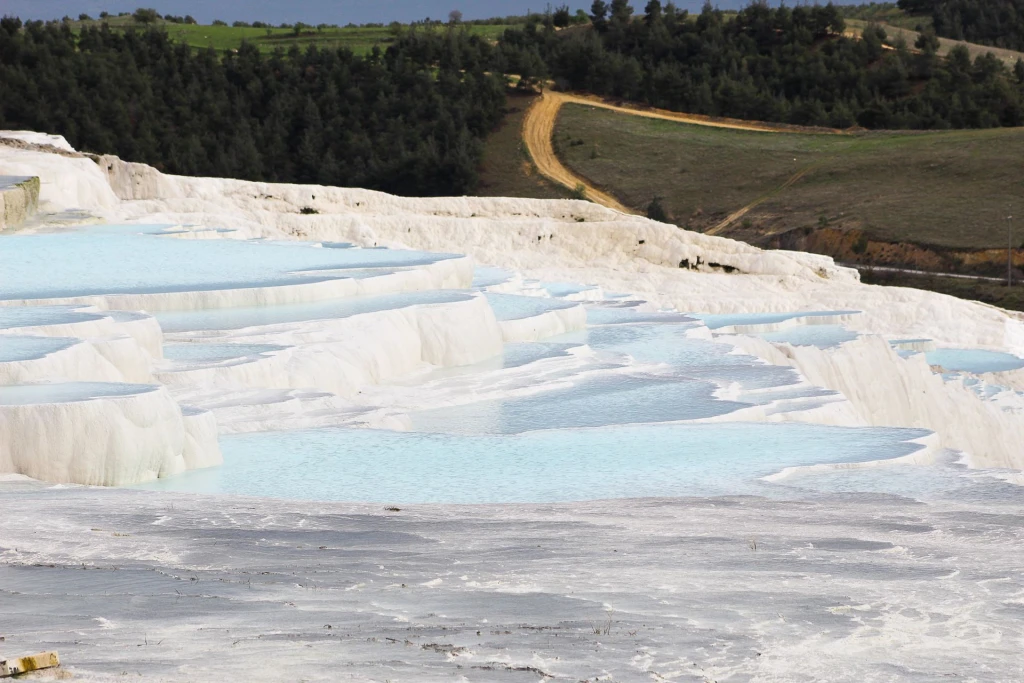
Pamukkale doesn't close for winter. The white terraces above the village stay open every day, the spring keeps running warm, and the coach crowds that fill the slope in summer mostly disappear. What changes is everything around the water: the air is cold, the days are short, and you still have to walk the travertine barefoot. Here's what November to February actually looks like, and how to plan a winter visit, including as a long day trip from the coast.
Is Pamukkale worth visiting in winter?
Yes, if you go in with the right expectations. The main reason to come is the contrast. The thermal water leaves the spring at around 35 °C, close to body temperature, and it does that in January just as it does in July. On a cold, clear morning you get steam rising off blue pools against white rock, and far fewer people in the frame.
The trade-offs are real, though. December and January are the wettest months in the area, the light is gone before 18:00, and wet stone under bare feet is bracing at 5 °C. If you only care about long, warm afternoons on the terraces, spring or autumn suits you better. If you like quiet sites and don't mind packing for cold weather, winter is a good time to see it.
Pamukkale weather from November to February
The nearest official long-term record is the Turkish State Meteorological Service (MGM) station in Denizli, about 18 km south of Pamukkale. These are its 1991–2020 averages:
MonthAvg. highAvg. lowRainy daysRainfallSunshine per dayNovember | 17.8 °C | 7.5 °C | 7.7 | 57.8 mm | 4.9 h |
December | 12.2 °C | 4.4 °C | 12.2 | 81.1 mm | 3.3 h |
January | 10.7 °C | 2.7 °C | 11.7 | 85.7 mm | 3.6 h |
February | 12.7 °C | 3.6 °C | 10.9 | 69.7 mm | 4.6 h |
Two things stand out. November is still a mild month, with afternoon highs in the high teens. And from December onwards, roughly one day in three brings rain, with only three to four hours of sunshine on an average day. Treat these as a guide rather than a forecast: conditions on the open terraces can feel colder than the city figures suggest, especially early in the morning.
Does it snow at Pamukkale?
Sometimes, but you can't plan around it. Snow is occasional rather than reliable. On 1 January 2026, for example, the Anadolu news agency reported overnight snow covering the travertines and Hierapolis, with visitors walking in the warm water among the snow the next morning.
Short days and late sunrise
Türkiye stays on UTC+3 all year, so winter mornings start late. At Pamukkale the sun rises at about 08:00 at the start of December and around 08:15 in late December and mid-January. Sunset is around 17:45 in December and just after 18:00 by mid-January. That matters because the site's closing times fall right around sunset (see below), so there's no lingering on the terraces after dark.
Is the water warm in winter?
Yes. The spring that feeds the terraces comes out at about 35 °C (Pamukkale University's geology field guide gives 35.6 °C at the source). The water then runs across the slope and cools as it spreads, so the shallow pools further down are noticeably cooler than the channels near the top. On a winter day, the warmest places to stand are where fresh water is actively flowing.
Not every basin holds water. The flow is moved around the slope so different sections can recover, which means some pools sit dry and pale while others are full. That happens all year, not just in winter.
Walking the travertine barefoot in the cold
Shoes come off on the travertine walkway, in every season. The white surface is soft calcium carbonate that footwear scratches and stains, so you carry your shoes while you're on it. In summer that's pleasant. In winter it's the part people find hardest.
A few things make it easier:
- Follow the warm water. Walking in the channels of fresh, flowing water keeps your feet warm. Dry patches and puddles that have gone cold are the parts that bite.
- Bring a small towel and dry socks. When you step off the rock, dry your feet straight away and put on warm socks and shoes. Wet feet in cold shoes will stay with you for the rest of the day.
- Use a small backpack. Keep your shoes, phone and towel in a bag so your hands are free. The wet rock can be slippery, and you'll want your balance.
- Take your time on the slope. Go slowly where the surface is wet or uneven, especially on the steeper sections.
Cleopatra's Pool (the Antique Pool) in winter
The Antique Pool, sold to most visitors as Cleopatra's Pool, sits inside Hierapolis at the top of the terraces. It's a thermal pool with fallen marble columns lying on the bottom, and the water is warm all year, which makes a winter swim far more comfortable than you'd expect. The Ministry of Culture and Tourism lists it as open to visitors. Swimming needs a separate ticket on top of the site entrance, so bring a swimsuit and a towel and budget for the extra fee on the day. The hardest moment isn't the water, it's getting out into cold air, so have warm layers ready.
Opening hours in winter
Pamukkale and Hierapolis are open every day of the year. According to the Ministry of Culture and Tourism's official site (checked 21 October 2026):
- Site: 08:00 to 18:00
- Ticket office: closes at 17:00
- South and North Gates: close at 18:00
- Pedestrian entrance from the village (the footpath up the terraces): closes at 17:00
- Hierapolis Archaeological Museum: 08:00 to 17:30, last tickets 17:00
The ministry's printed brochure shows the South Gate opening earlier (06:30) from November to February, so opening times can differ by gate. Check muze.gov.tr shortly before your visit, and plan to arrive well before 17:00 if you want to walk up from the village.
What to see in Hierapolis on a cold day
Hierapolis was founded in the 2nd century BC by Eumenes II, King of Pergamon, and most of what you see was rebuilt after a major earthquake in AD 60. Together with the travertines, it has been a UNESCO World Heritage Site since 1988. Winter is a comfortable time to explore it, because the open ruins that are punishing in July are easy walking at 10 °C.
- The Roman theatre on the hillside above the pool, with wide views over the terraces and the valley below.
- The necropolis, the largest ancient cemetery in southwest Anatolia, with tombs lining the road at the northern entrance.
- The Martyrium of St Philip, an octagonal church built in memory of the apostle, on the slope above the city.
- The Plutonion, a sanctuary tied to the god of the underworld, next to the Temple of Apollo.
- The Archaeological Museum, housed in the old Roman baths. It's indoors, so it's a good place to warm up if the weather turns.
A winter day trip to Pamukkale from the coast
Many people visit Pamukkale on a day trip from the coast, and that works in winter too, as long as you know it's a long day. ALYS runs these Pamukkale day tours:
- From Side, our Pamukkale and Hierapolis day tour takes about 16 hours. It includes hotel pickup and drop-off, an air-conditioned coach, breakfast, lunch and dinner, a licensed guide, a stop at an onyx workshop and a local wine cellar, and free time at the terraces and Hierapolis. Site and pool entrance fees and the balloon flight are not included.
- From Marmaris, the Pamukkale day trip with breakfast and a guided visit takes about 13 hours, with pickup from Marmaris, İçmeler and Siteler hotels, breakfast, lunch and a guide.
- If you want to see the terraces from above, the Marmaris Pamukkale trip with a sunrise balloon flight takes about 17 hours and includes a shared-basket flight with a licensed pilot. Like all balloon flights, it depends on the weather on the morning.
In winter, a good part of that drive happens in the dark, and your time at the site has to fit inside the 08:00–18:00 window. Keep your free time focused: terraces first while there's light, then the theatre or the museum. Check the booking calendar on each tour for the dates that are running in winter.
For more on how these trips work, read our guides to Pamukkale and Hierapolis day tours from Side and the Marmaris to Pamukkale day trip. If you're spending the winter on the coast, our guide to Side in winter covers what's open and what the weather is like there.
What to wear and pack for Pamukkale in winter
- Warm layers and a waterproof jacket; on a wet day the open terraces have no shelter.
- Shoes that are easy to take off and put back on, plus a spare pair of warm socks.
- A small quick-dry towel for your feet, and a larger one if you plan to swim.
- A swimsuit, worn under your clothes if you plan to use the Antique Pool.
- A small backpack or dry bag to carry your shoes and phone on the terraces.
- A hat and gloves for the early morning and late afternoon.
- Sunglasses: even in winter, the white rock is bright when the sun comes out.
Frequently asked questions
Is Pamukkale open in winter? Yes. Pamukkale and Hierapolis are open every day of the year. In winter the official hours are 08:00 to 18:00, with the ticket office and the footpath from the village closing at 17:00.
Is the water at Pamukkale cold in winter? No. The spring comes out at around 35 °C all year. It cools as it runs down the terraces, so the channels with fresh, flowing water are the warmest places to stand.
Can you swim in Cleopatra's Pool in winter? Yes. The Antique Pool is listed as open, and its thermal water stays warm in winter. Swimming needs a separate ticket in addition to the site entrance.
Do you have to walk barefoot on the travertines in winter? Yes. Shoes come off on the travertine walkway all year to protect the surface. Bring a towel and dry socks so you can warm your feet as soon as you step off.
Does it snow at Pamukkale? Occasionally. Snow covered the terraces on 1 January 2026, for example, but it's not something you can count on. December and January are more often cool and rainy.
Can I visit Pamukkale on a day trip from Side or Marmaris in winter? Yes, but expect a long day: about 16 hours from Side and 13 to 17 hours from Marmaris, depending on the tour. Check each tour's booking calendar for the winter dates that are running.
What is the best month to visit Pamukkale in winter? November is the mildest, with average highs of about 18 °C in nearby Denizli. December and January are the coldest and wettest months, but also the quietest.
Our partners